


Hôtel de Toiras: The Luxury of an Island That Has Forgotten Nothing
- Gastrognito

- 6 days ago
- 7 min read
Overlooking the harbour of Saint-Martin-de-Ré, Hôtel de Toiras cultivates a distinctly French vision of hospitality: historic without feeling frozen in time, refined without ever becoming intimidating. From a suite overlooking the sailing boats to a discreet interlude at Villa Clarisse and the celebrated lobster pasta at George’s, we discovered a house where every detail seems to reveal another fragment of the island.

The Harbour Takes Centre Stage
There are hotels one chooses because of their destination. And then there are those that ultimately become one of its defining symbols. In Saint-Martin-de-Ré, Hôtel de Toiras unquestionably belongs to the latter category.
Set at the entrance to the harbour, facing the boats, the lively terraces and the pale façades of the historic capital of the Île de Ré, the hotel occupies a former 17th-century shipowner’s residence. Its walls seem to have absorbed nearly four centuries of Atlantic winds, departures at sea and returns to the quay. A sense of history the property has never attempted to erase beneath an overly polished décor.
From the moment we arrive, the tone is set. Entering Toiras feels like stepping into a private residence, with that rare impression that the house existed long before us and will continue to do so long after our departure. The location is spectacular, yet never ostentatious: life on the harbour unfolds directly outside the windows like a constantly changing painting.
A House That Favours Character Over Uniformity
At a time when part of the luxury hotel industry appears to reproduce the same neutral tones and minimalist lines from one continent to the next, Hôtel de Toiras embraces a far more distinctive personality.
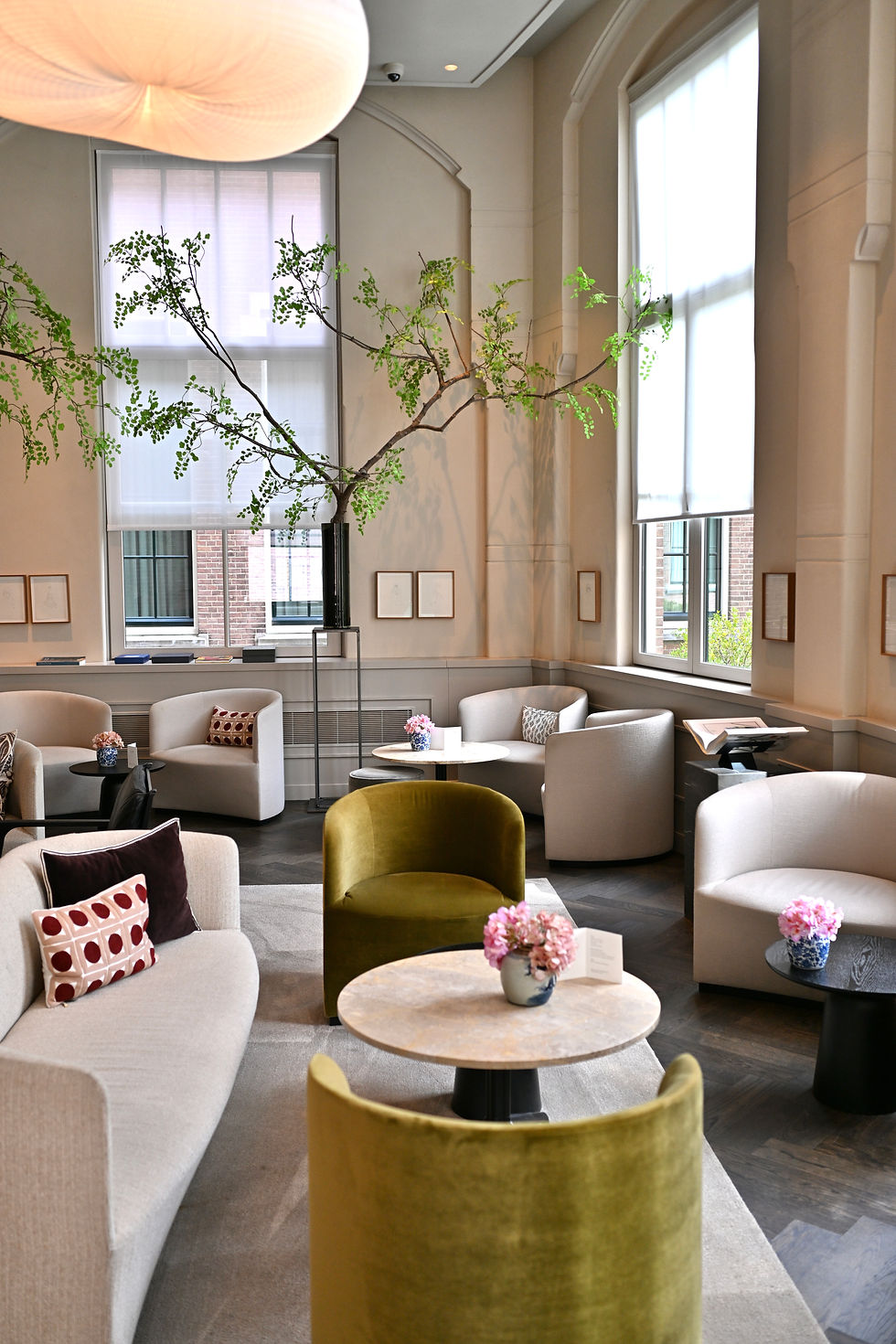
The interiors, conceived with Pierre-Yves Rochon, create a world of fabrics, antique furniture, patinated surfaces, wood panelling and historical references. Every space has its own atmosphere, without ever appearing to have been designed merely to follow a passing trend. Traditional Charentais decorative influences meet a muted, almost novelistic form of classicism.
The result subtly transports us back in time. Not into a museum setting, but into a warm, living and deeply inhabited home. Printed fabrics, carefully sourced objects and rich tones create an authentic environment that stands apart from standardised luxury. One does not come here solely for the comfort of a five-star hotel, but to rediscover the charm of an era when hotels still possessed a true identity.

A Suite Above the Rooftops, Overlooking Saint-Martin
Our stay unfolded at the very top of the house, in a suite overlooking the harbour of Saint-Martin-de-Ré.
From the windows, the eye drifts across masts, boats and the almost choreographed movements of the quay. In the morning, the light gradually reveals the façades and cobbled streets. By the end of the day, the harbour changes tempo, the terraces begin to fill and the final rays of sunlight settle across the water.
This view is far more than a simple hotel selling point. It genuinely transforms the experience. It serves as a constant reminder of where we are and gives the suite an almost cinematic quality. One could easily remain by the window for hours, watching life in Saint-Martin unfold rather than immediately setting off to explore the island.
Inside, contemporary comfort remains discreet, allowing the character of the volumes and furnishings to take precedence. The atmosphere is generous and enveloping, with that additional sense of soul that overly perfect renovations can sometimes erase. Each room and suite is, moreover, inspired by a historical figure, reinforcing the feeling of staying in a house composed of stories rather than a succession of room numbers.

Villa Clarisse, the Hidden Sister Property in Saint-Martin
A few minutes’ walk from the harbour, Villa Clarisse reveals a different expression of the same approach to hospitality. It would be reductive to consider it merely an annexe: it is better understood as Toiras’s sister property, more secluded, more serene and oriented towards its garden.
This historic residence comprises only nine rooms and suites. Once again, Pierre-Yves Rochon has worked with the balance between heritage and contemporary comfort, though here within a brighter and more pared-back palette. Behind its walls, Saint-Martin suddenly seems to recede. The vegetation, silence and white façades form an almost insular refuge within the island itself.
The garden, designed by landscape architect Louis Benech, unfolds around a heated outdoor swimming pool. Guests of Hôtel de Toiras enjoy privileged access, making it possible to move effortlessly from the energy of the harbour to an afternoon beside the water. And yet, despite being only a three-minute walk away, the atmosphere is entirely different.
Villa Clarisse is also home to the Spa by Olivier Claire, with treatment rooms, relaxation spaces and rituals developed around the products of the French skincare house. This sense of complementarity is one of the great strengths of the experience: at Toiras, the spectacle of the harbour and the energy of Saint-Martin; at Villa Clarisse, the privacy of a hidden garden and the more introspective luxury of silence.
George’s, a Table Looking Towards the Atlantic
In the evening, only a few steps separate the rooms from George’s, the restaurant of Hôtel de Toiras.
Its terrace opens directly onto the harbour in an atmosphere of deliberately relaxed elegance. The dining room, decorated with subtle maritime references, extends the identity of the house without slipping into a literal interpretation of coastal design. Here too, the setting is an integral part of the dining experience.
The restaurant’s name carries several references: to George Washington, one of whose ancestors came from the Île de Ré; to the son of Olivia and Didier Le Calvez; and to the Four Seasons Hotel George V, where the owners first met. Behind these multiple associations lies a much simpler idea: that of a place designed to welcome, to share and to create memories.
Since 2024, the kitchen has been led by Ronan Fillatre. Trained at the Notre-Dame hospitality school and later at Ferrandi Paris, the chef has worked in several highly regarded establishments, including Le Carré des Feuillants in Paris, La Chèvre d’Or in Èze and L’Incomparable in Aix-les-Bains, where he contributed to the restaurant earning a Michelin star. Experiences in New York and Belgium later completed his culinary journey.
At George’s, this technical expertise is placed in the service of a cuisine deeply rooted in its surroundings. Fish from the local auction, shellfish, seasonal vegetables and salt from the Île de Ré form the principal vocabulary of a menu that favours precision over theatrics.

George’s Celebrated Lobster Pasta
Some restaurants possess a dish that gradually moves beyond the status of a recipe to become a true signature. At George’s, that dish is its celebrated lobster pasta.
The official wording makes no attempt to create unnecessary suspense. The dish fully embraces both its reputation and its generosity. On the plate, lobster and pasta come together without unnecessary embellishment, in a composition that is indulgent and deeply comforting.
The cooking is precise, the sauce coats the pasta with remarkable depth and the delicate maritime sweetness of the shellfish comes through without ever being obscured. There is something almost familial about the dish, yet it is executed with the rigour and refinement expected of a distinguished property.
It is probably this contrast that makes it so memorable: a dish that is immediately understandable, indulgent from the very first glance, yet whose balance reveals the work and discipline of the kitchen. No gratuitous technical display, no superfluous decoration. Simply one of those dishes one would happily recommend before the menu has even reached the table.
George’s celebrated lobster pasta officially appears among the restaurant’s signature dishes, alongside the sole served for sharing. Together, they perfectly express the philosophy of the kitchen: begin with an exceptional ingredient, treat it with precision and never lose sight of pleasure.

Château Clarisse, From the Harbour of Ré to the Vineyards of Saint-Émilion
The story of Olivia and Didier Le Calvez does not end on the quays of Saint-Martin. It continues several hundred kilometres from the island, across the limestone soils of Puisseguin-Saint-Émilion.
Since 2009, the couple have produced the wines of Château Clarisse, a family estate named in honour of their daughter. After several years of searching, they selected a vineyard located on a plateau of Astéries limestone, particularly well suited to Cabernet Franc and Merlot.
The project takes on particular significance when one considers the career of Didier Le Calvez, an internationally recognised figure in luxury hospitality. After managing several major properties, he notably oversaw the reopening of the Four Seasons Hotel George V in Paris before serving as its general manager. Together with Olivia Le Calvez, he has brought the same pursuit of precision, consistency and elegance to the vineyard that defines their hotels.
At Hôtel de Toiras, we had the opportunity to discover two expressions of this production. The red, produced in Puisseguin-Saint-Émilion, reveals a profile that is structured yet fresh, with the predominantly Cabernet Franc blend bringing finesse and verticality, complemented by the roundness of Merlot.
The white, released under the name Clarisse Chardonnay, offers a more immediate and luminous expression. Its freshness naturally complements the maritime atmosphere of Saint-Martin, creating an unexpected connection between the vineyards of Bordeaux and the Atlantic Ocean.
Serving the estate’s own wines within the hotel is therefore far more than a simple branding exercise. It reinforces the coherence of a family universe in which hospitality, gastronomy and wine are in constant dialogue.

The Luxury of Coherence
What remains after a stay at Hôtel de Toiras is not simply the view over the harbour, the beauty of a suite or the memory of a plate of lobster pasta.
Above all, it is the coherence of a house that never appears to have succumbed to the temptation to overstate itself. The historic décor retains its texture and imperfections. The service accompanies without intruding. The restaurant celebrates the produce of the island without turning terroir into a marketing device. Villa Clarisse offers a complementary sense of escape, while the wines of Château Clarisse extend the family story into every glass.
In a luxury world often obsessed with novelty, Toiras reminds us that emotion sometimes comes from what has been patiently preserved: a façade facing the harbour, a room with a history, a garden hidden behind a wall and a recipe that has become a signature.
A legendary address, certainly. But above all, a deeply endearing house that makes one long to return to Saint-Martin-de-Ré simply to rediscover the light of the harbour from the very same window.



Comments