


At Inter Scaldes, the Portuguese Atlantic Meets the Waters of Zeeland
- Gastrognito

- Jun 12
- 6 min read

At Inter Scaldes, Jeroen Achtien welcomed Rui Paula for a four hands dinner shaped by the sea. Two chefs, each awarded two Michelin stars, two distinct territories and, behind the precision of the plates, a genuine connection between the teams of both houses.
At first glance, the evening had all the ingredients of a major gastronomic event. Two chefs, four Michelin stars and a menu created for a single night. Yet the encounter between Jeroen Achtien and Rui Paula was built on something more meaningful than the simple addition of two celebrated names.
Both chefs work in houses with a profound relationship to water. Jeroen Achtien cooks in Zeeland, at the heart of a region shaped by estuaries, shellfish and produce from the Eastern Scheldt. Rui Paula welcomes his guests in Leça da Palmeira, on the rocks of the Portuguese coast, facing an Atlantic whose waves appear almost close enough to reach the dining room windows.
The sea was therefore the natural thread running through the dinner. The challenge was to avoid a menu in which fish and shellfish gradually began to blur into one another. It was precisely through the differences between the two chefs that the evening found its balance.
Two journeys, two interpretations of produce
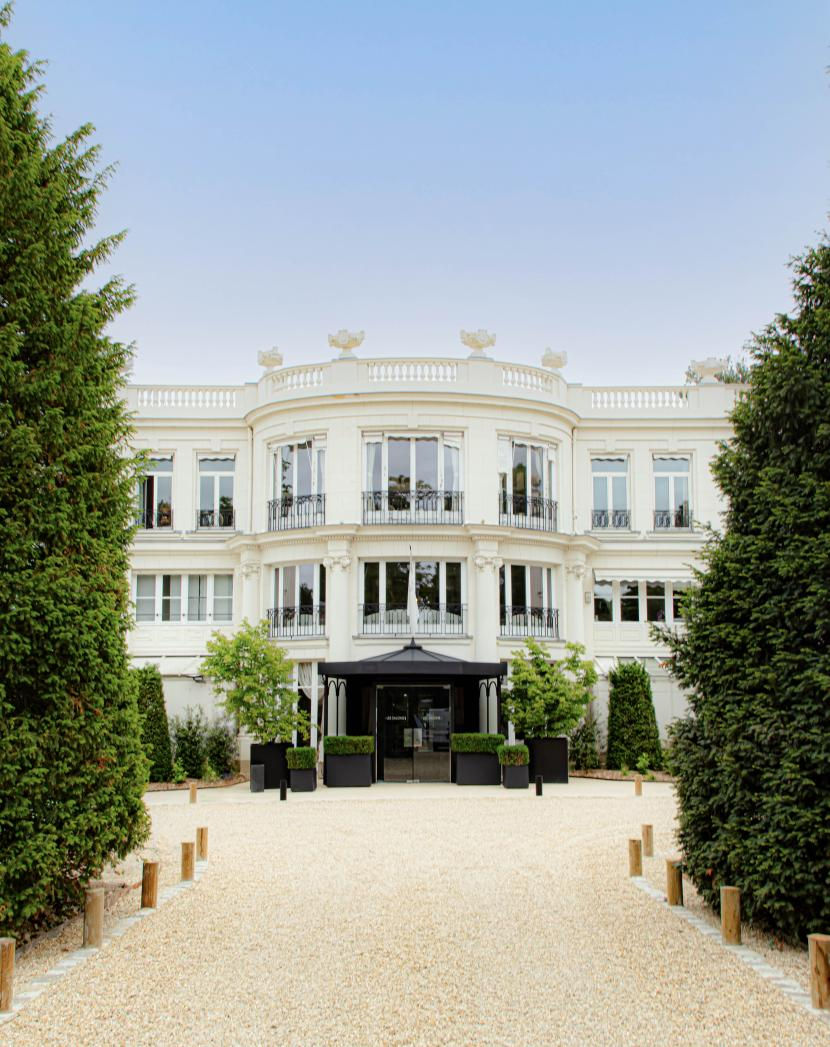
Inter Scaldes has long held an important place in the history of Dutch gastronomy. When Jeroen and Sanne Achtien took over the restaurant, they inherited a prestigious house, but also a considerable responsibility: to allow an institution to evolve without becoming confined by its past.
Jeroen Achtien’s career had prepared him for that challenge. He spent more than eight years at De Librije, Jonnie Boer’s three Michelin star restaurant in Zwolle. There, he steadily rose through the ranks, eventually becoming head chef during his final year. That period instilled in him great discipline, but also a particularly free approach to interpreting a territory and its ingredients.
In 2018, he left the Netherlands with Sanne to take charge of the kitchens at the Vitznauerhof in Switzerland. At Restaurant Sens, overlooking Lake Lucerne, he earned a first Michelin star in 2019, followed by a second in 2021. Those years allowed him to develop a more personal culinary identity before returning to the Netherlands.
At Inter Scaldes, that experience now meets the produce of Zeeland. The cuisine draws from the region without ever reducing it to an overly literal expression of place. Fermentation, maturation, sauces and precise seasoning add depth while allowing the principal ingredient to remain perfectly recognisable.
Rui Paula comes from a different landscape, yet one equally shaped by the ocean. His Casa de Chá da Boa Nova is built directly on the rocks of the Portuguese coast. Designed by architect Álvaro Siza Vieira, the building is inseparable from the experience. From the dining room, guests do not simply glimpse the Atlantic. They watch it move, strike the rocks and change colour throughout the meal.
That presence naturally runs through the cuisine of the house. Fish and seafood occupy a central place, but Rui Paula does not seek to reproduce a fixed interpretation of Portuguese gastronomy. He treats the memory of his country as something living, confronting it with contemporary techniques and unexpected combinations.
At his side, Catarina Correia plays an essential role. As Executive Chef of Casa de Chá da Boa Nova, she contributes fully to the restaurant’s daily identity and to the practical expression of Rui Paula’s vision. Her presence at Inter Scaldes was a reminder that this encounter was not simply between two chefs, but between two houses and their respective teams.

A conversation that began in Portugal
The evening at Inter Scaldes was not the first meeting between the two chefs. Several months earlier, Jeroen Achtien had joined Rui Paula in Portugal for an initial four hands dinner. The gathering in Kruiningen therefore represented the second chapter of their collaboration.
That reciprocity gave the exercise greater depth. Rui Paula was not simply arriving to present a selection of creations in another chef’s restaurant. Together, the two chefs were continuing a conversation that had begun on the Portuguese coast, this time surrounded by the land and waters of Zeeland.
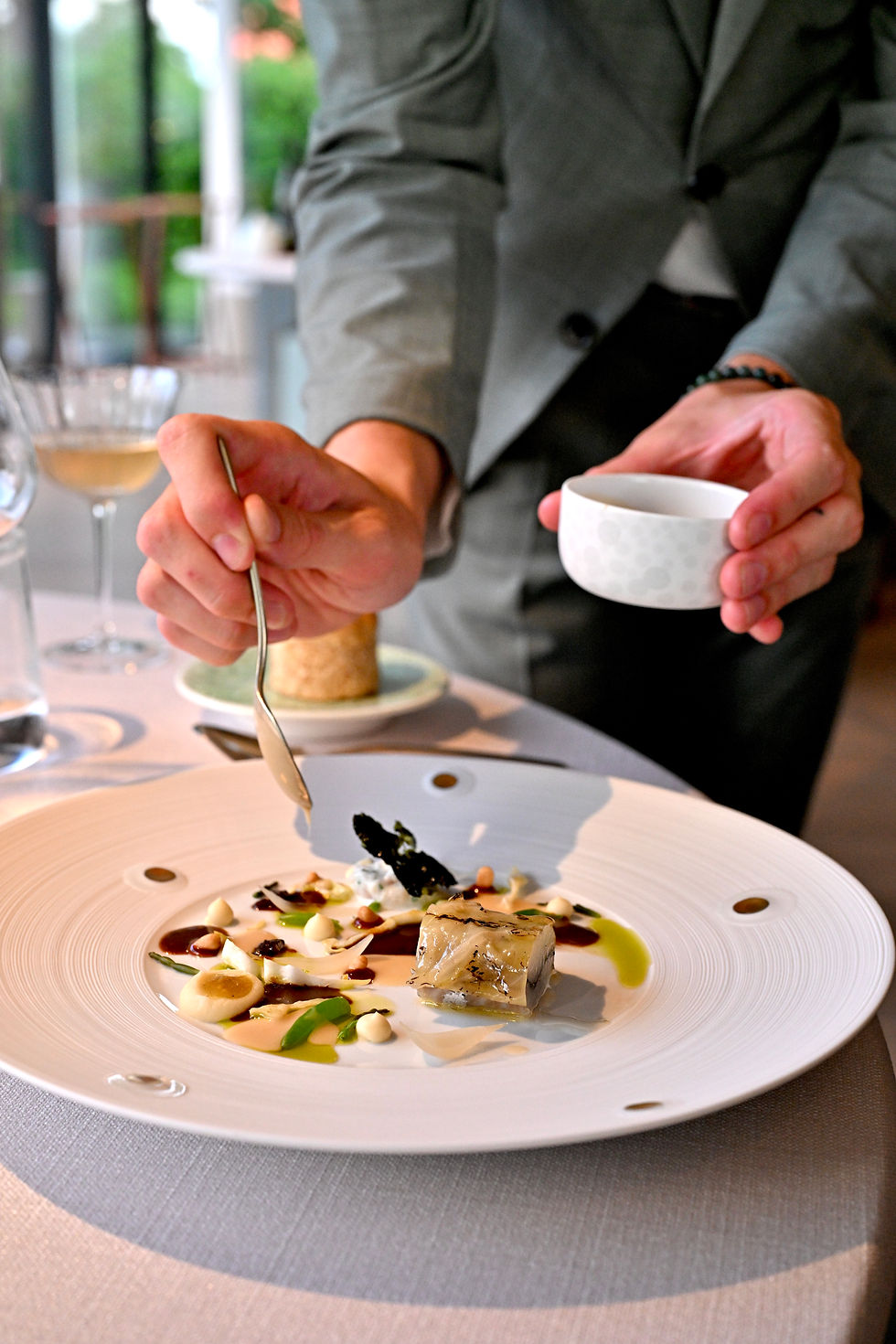
The eight course menu reflected that intention. Eastern Scheldt lobster, scarlet prawn, langoustine, sea bream, haddock and squid created an almost entirely maritime journey. Yet the accompanying ingredients constantly shifted the tone.
Langoustine met unripe pear, mole and tomato. Sea bream was paired with broccoli and makrut lime. Haddock arrived with sherry, cabbage and langoustine sauce. Seafood remained at the centre of the narrative, but each dish followed its own direction.
Coherence never came at the expense of surprise.
Calamari “Chanel”, Rui Paula’s signature
Among Rui Paula’s creations, Calamari “Chanel” was perhaps the most immediately recognisable. Its name naturally drew attention, yet the dish relied on far more than the impact of its title.
The squid was served with Bordelaise sauce, garlic, shallot and chives. The pairing could appear unexpected. The delicate, almost gentle character of the squid was met by a darker and more profound sauce, one traditionally associated with an altogether more terrestrial register.
That contrast gave the dish its character. The seafood remained perfectly clear, while the sauce introduced an unusual intensity. Garlic and shallot added a generous, almost familiar dimension before the precision of the execution returned the composition to the realm of fine dining.
Calamari “Chanel” offers a concise expression of Rui Paula’s cuisine. Portugal is present without any accumulation of obvious references. Its identity emerges through the relationship with fish, the intensity of flavour and a certain generosity. The chef does not attempt to illustrate his country. He cooks from within it.

The precision of Jeroen Achtien
Opposite this more expressive cuisine, Jeroen Achtien brings a sense of clarity. His dishes may involve considerable technical complexity, yet they remain easy to understand. Nothing appears to have been added merely to demonstrate skill.

The haddock served with sherry, cabbage and langoustine sauce was a convincing example. The dish combined assertive flavours while maintaining precise balance. The sauce provided depth, the cabbage introduced a vegetal dimension and the sherry brought an additional layer of tension.
This clarity is one of the defining strengths of Inter Scaldes today. The cuisine possesses the ambition of a great gastronomic house without becoming rigid or intimidating. Technique is ever present, but it never takes control of the narrative.
The same feeling extends to the wider experience. Inter Scaldes is elegant and exacting, yet the service retains a natural sense of flow. During a four hands dinner, when two brigades, two sets of habits and two rhythms must come together for a single evening, that apparent simplicity may be one of the most difficult achievements of all.
In the kitchen, an unmistakable sense of connection
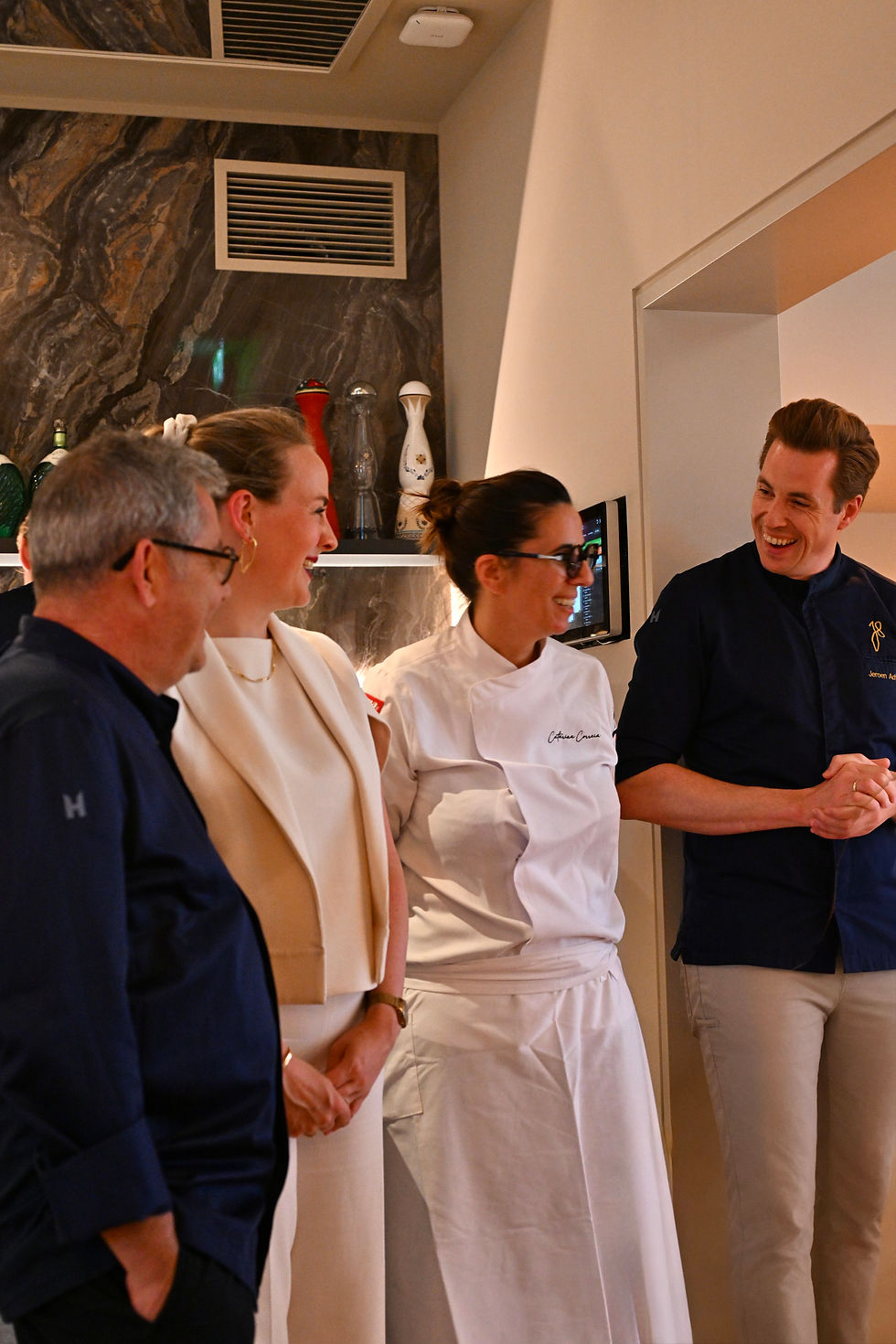
Beyond the plates, the connection between the two houses could be felt throughout the kitchen. Jeroen Achtien, Rui Paula and Catarina Correia worked alongside their respective teams in an atmosphere defined by concentration, but also by laughter, spontaneous exchanges and genuine bursts of joy.
Nothing appeared forced. The chefs and their brigades seemed to be continuing a conversation that was already well established. Each retained their identity, their gestures and their own rhythm, yet there was no sense of distance or rivalry. There was, naturally, the precision required by an evening of this calibre, but also a visible pleasure in working together.
It was particularly beautiful to observe. The atmosphere revealed two houses and two teams that appeared to hold one another in deep respect. In a world where some collaborations can occasionally feel designed primarily as communication exercises, that shared joy brought something far more sincere.
It also helped explain the coherence of the menu. The dialogue was not confined to the plates. It was already present in the glances, the gestures and the atmosphere of the kitchen.

Four stars alone do not create a true encounter
Four hands dinners have become increasingly common in fine dining. They create rarity, attract attention and allow chefs to take their cuisine beyond the walls of their own restaurants. Yet an impressive line up does not necessarily guarantee a coherent evening.
At Inter Scaldes, the encounter succeeded because it was built on more than the distinctions held by the two chefs. Jeroen Achtien and Rui Paula both share a powerful relationship with their respective territories, yet they express it in very different ways.
For the former, Zeeland emerges through precision, freshness and technical depth. For the latter, the Portuguese Atlantic is expressed with greater warmth, intensity and memory.
The dinner never attempted to merge those identities artificially. It allowed them to enter into dialogue.
By the end of the evening, Inter Scaldes remained unmistakably Inter Scaldes. Yet for several hours, the Portuguese Atlantic had found its place among the waters of Zeeland. In the kitchen, the laughter, exchanges and connection between Jeroen Achtien, Rui Paula, Catarina Correia and their teams also served as a reminder that a great gastronomic encounter cannot be measured solely by its number of stars or by the precision of its menu.
It can also be recognised in mutual respect and in the visible pleasure of creating together.
Four Hands Dinner
Inter Scaldes x Casa de Chá da Boa Nova
Jeroen & Sanne Achtien - Rui Paula & Catarina Correia
Inter Scaldes, Kruiningen, the Netherlands


Comments